Another highly anticipated U.S. Bureau of Labor Statistics' Employment Situation Summary was released on Wednesday and its results are better than expected. As of the latest data, the United States added 130,000 jobs in January, more than the 41,000-48,000 calculated for November and December after revisions. However, the U.S. unemployment rate didn't budge much and remains at 4.3 percent. It has been above the 4-percent mark since June 2024.
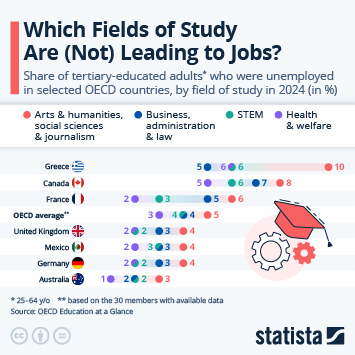
U.S. jobs added had shown significant weakness over the past year as months of gains followed months of losses and the unemployment rate crept up over time. Internationally, higher unemployment was seen in more OECD countries.
Data for January was delayed due to the latest brief U.S. government shutdown. Previously, November data had also been late due to October's shutdown and arrived two and a half months after the last pre-shutdown jobs report.
The unemployment rate had reached a high of 4.5 percent in November – there’s no data for October due to the shutdown – as 7.8 million people were unemployed, the highest level since August 2021, when the U.S. economy was still recovering from the Covid-19 shock. While labor supply is clearly there, demand has dried up somewhat. Despite better numbers in January, U.S. employers added just 73,000 jobs per month on average over the last three readings, down from 380,000 monthly job additions in 2022, more than 200,000 in 2023 and 168,000 per month in 2024. For 2025 overall, the average looks most dire at just 15,000 average monthly gains.